



Towards the end of 1959, the renowned physicist and science communicator Richard Feynman attended a meeting at Caltech. There, he delivered a speech that would leave an indelible mark on the scientific world: “There’s Plenty of Room at the Bottom: An Invitation to Enter a New Field of Physics.” This talk effectively laid the foundation for nanotechnology. Feynman went so far as to propose that the entire Encyclopedia Britannica could be written on the head of a pin. He also spoke of the possibility of creating nanorobots that could travel inside the human body and predicted that we would eventually move away from room-sized computers toward miniature devices. What sounded like a page out of a science fiction novel back then is now our everyday reality.

Dwarf Particles
The word “nano” comes from the Greek word for “dwarf.” Nanoparticles are materials with dimensions ranging between 1 and 100 nanometers. 1 nanometer is one-billionth of a meter, or 10-9 meters. Since it’s quite difficult to visualize such small numbers, let’s make a few comparisons. The thickness of a human hair is roughly 80,000 to 100,000 nanometers. Our fingernails grow about 1 nanometer every second. An ant is about 5 million nanometers long. The smallest scale the naked eye can perceive is about 20,000 nanometers. We use these “dwarf” particles—which are far too small to see directly—in most of our modern technology, including the phone or computer you’re using to read this. Let’s dive into what makes these particles so special!

What Color is Gold?
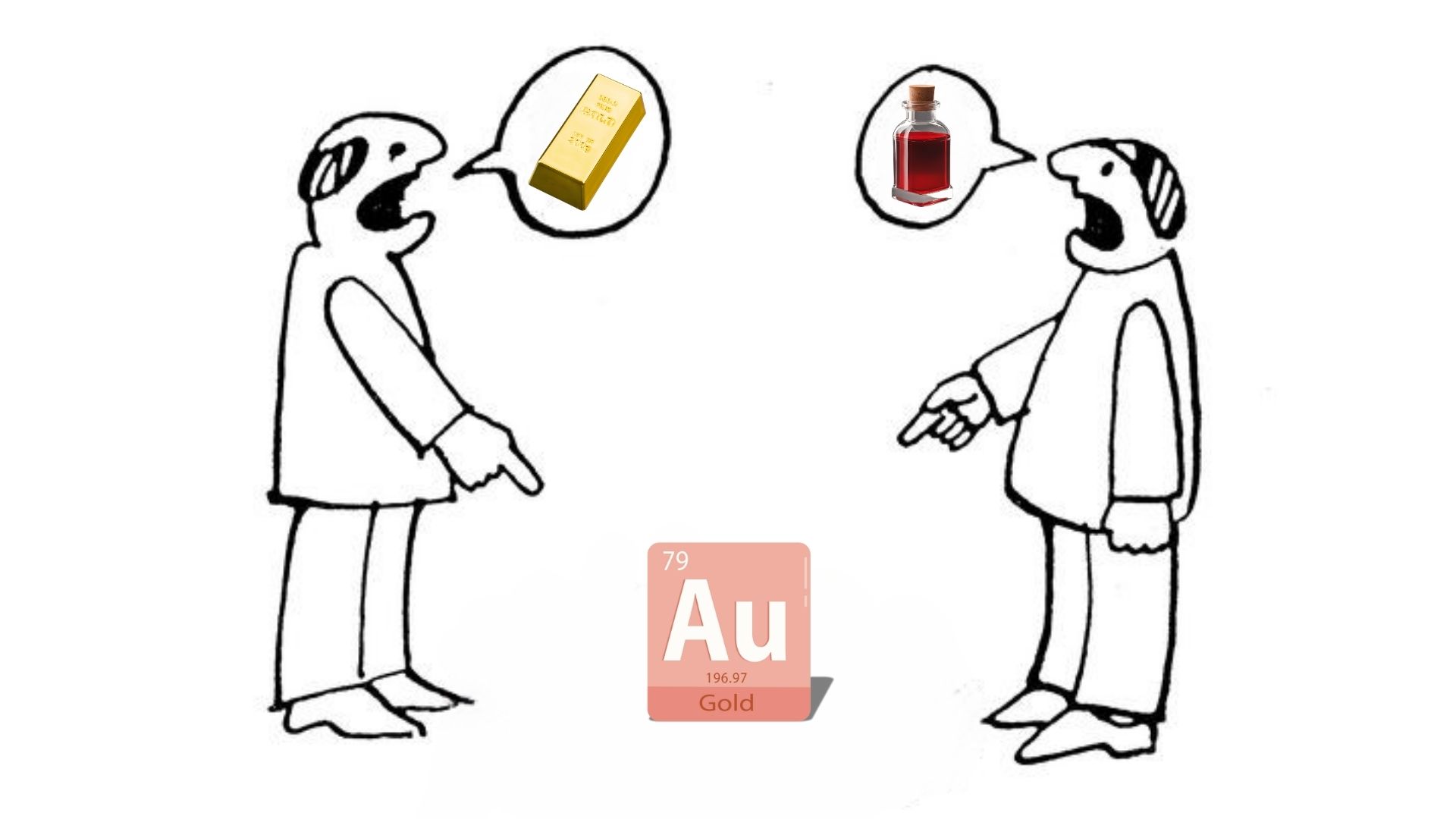
Let’s start with a question: What color is gold? We would all likely answer “yellow.” However, the first question we should ask before answering is: what is the scale of that gold? While a gold bar appears yellow, gold at the nanoscale can appear pinkish-red. As the size of a particle changes, so can its properties. For example, bulk gold is generally chemically inert. However, gold at the nanoscale can actively participate in reactions. It also possesses unique light-absorbing and conductive properties.
So, What Causes These Differences in Properties?
The first reason is that the surface-area-to-volume ratio of nanoparticles is much larger than that of macroscopic particles. In other words, as the particle size shrinks, the surface area increases. One of the most important factors for substances to undergo a reaction is surface area. The larger the area, the more particles can interact with one another. This increases both the probability and the speed of a reaction. For this reason, it is very common to use nanoparticles as catalysts to accelerate reaction rates.

Another likely reason is that when the particle size shrinks, the laws of physics that govern our macroscopic world change almost entirely. Materials we can see with our eyes are called macroscopic. However, materials at the nanoscale consist of only one or a few atoms, making them far too small to see. The world we see is governed by the laws of classical physics. While these laws—also known as Newtonian mechanics—work almost perfectly for our daily lives, they lose their relevance at smaller scales, where anomalies begin to appear. This is where quantum physics and its laws take over. Particles that move in predictable, group-like patterns at the macroscopic level become nearly impossible to predict when isolated, behaving in ways that defy everything we know. Furthermore, as the size of the material decreases, its electron band structures—which influence electrical conductivity and optical properties—also shift. Consequently, the electronic, optical, and magnetic properties of nanoparticles can be vastly different from their macroscopic counterparts.
How Are Nanoparticles Produced?
There are two primary approaches to obtaining nanoparticles: The first is known as the “top-down” approach. In this approach, the goal is to break down large structures into smaller pieces, usually through physical or mechanical force. This method is mostly used for large-scale industrial production.
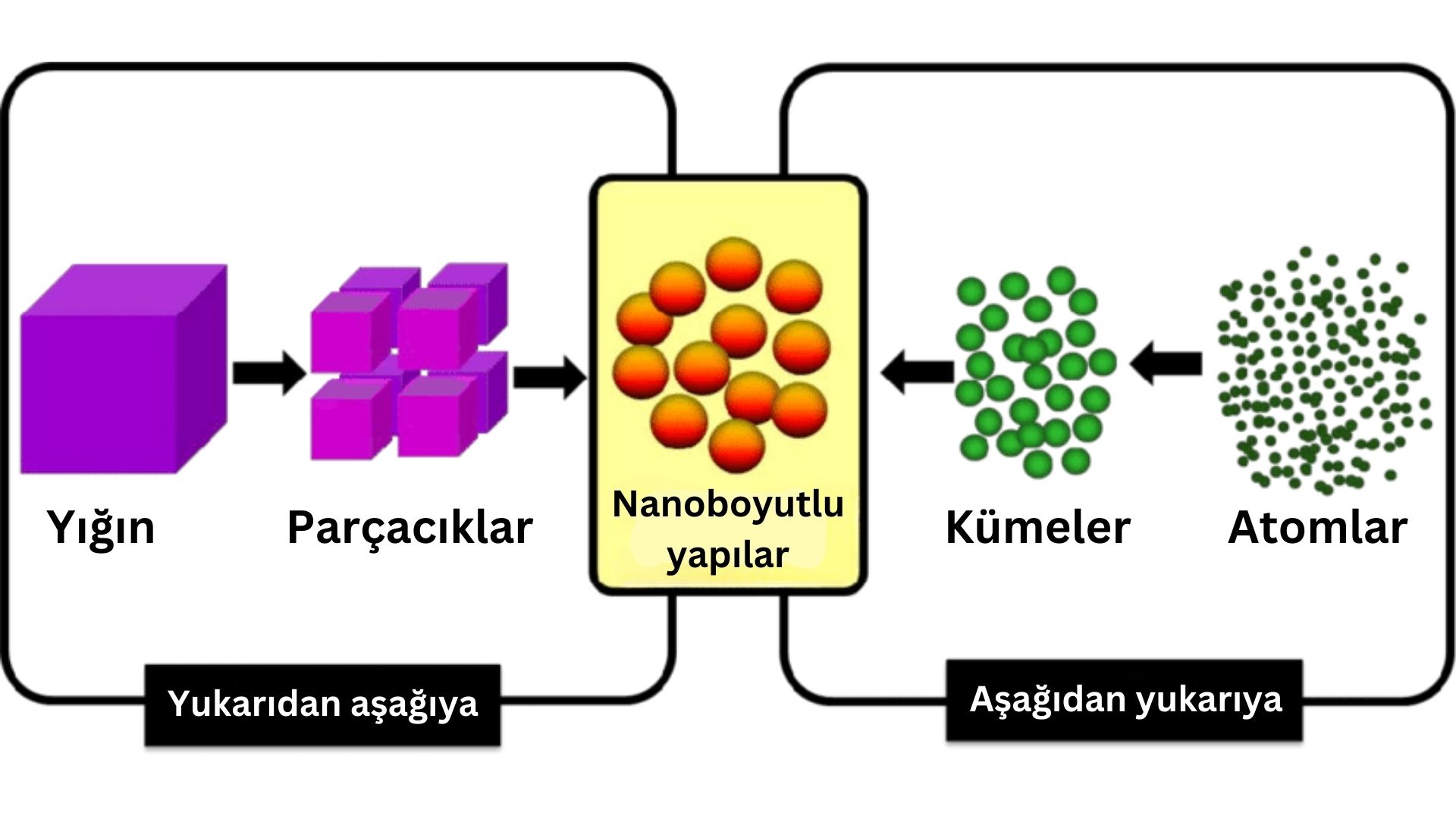
The other method, frequently used in research laboratories, is the “bottom-up” approach. Unlike the other method, this approach focuses on the controlled formation of nanoparticles starting from the molecular level. Synthesis usually begins with a metal salt, which is then broken down into its ions. The goal is to reduce the metal ion—for example, Au(+3)—into a metal particle, such as Au(0). This is how we obtain particles from substances in their ionic state. However, by their nature, all nanoparticles tend to agglomerate; they have a natural desire to combine and form larger structures. If this isn’t prevented, the material can revert to a macroscopic scale and lose its nanoparticle properties. To prevent this, surfactants are usually used. These molecules, which are often quite large, wedge themselves between the nanoparticles to prevent them from clumping together. Another purpose of surfactants is to ensure the particle is formed in the desired shape.
The Essential Tool of Nanotechnology: The Electron Microscope
As we mentioned earlier, nanoparticles are so small that it is impossible to see them with the naked eye. So, how can we tell if they are actually at the nanoscale? This is where electron microscopes come in; they are used to visualize these incredibly small particles. In this type of microscope, an electron beam is directed at the sample and focused using magnetic lenses; an image is formed by observing how the electrons scatter, pass through, or bounce back. This makes it possible to gather detailed information about the material’s surface structure, size, and shape.
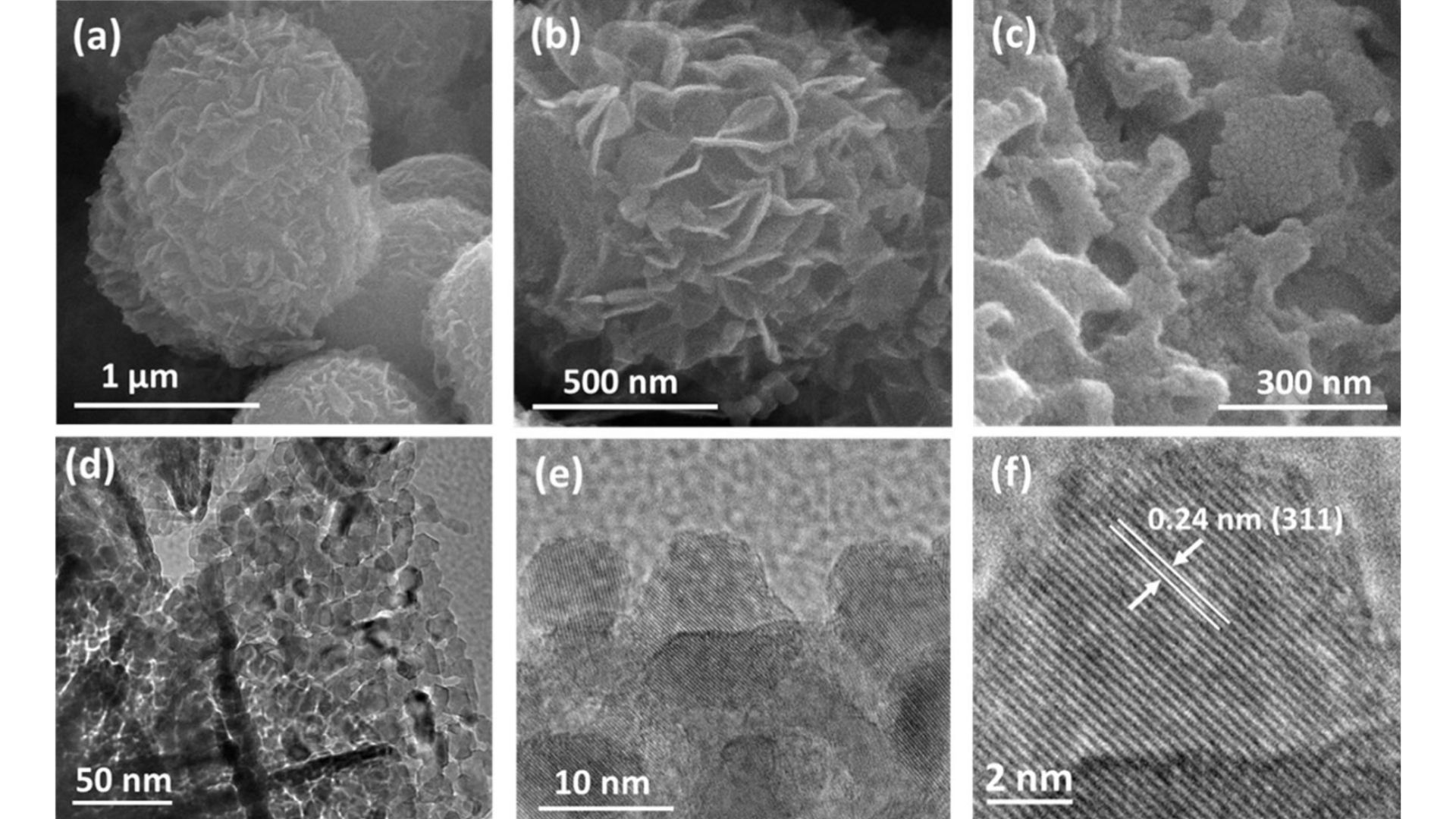
Image Source: (Aksoy et al., 2020)
Where is Nanotechnology Used?
We’ve learned that surface area is crucial for nanoparticles, which is why surface modification is so important for achieving desired properties. Nanotechnology aims to create more advanced materials by manipulating atoms and surfaces. Today, we see nanotechnology being used in almost every field. In medicine, for example, it is used in drug delivery systems. Thanks to nanotechnology, drugs encapsulated into tiny particles can be delivered directly to targeted cells. This targeted approach is especially vital for cancer research. Additionally, biosensors and imaging devices used in diagnostics are constantly improving thanks to nanotechnology.

In the electronics industry, nanotechnology is used extensively, particularly in computer processors. The fact that massive telephones have become “pocket” phones and that room-sized computers can now fit into our bags is all thanks to nanotechnology.
Furthermore, there is growing interest in using nanotechnology in almost every sector, including clean energy production, the development of catalysts to speed up reactions, and the robotics industry.
A New World
We know a great deal about how matter behaves in the macroscopic world. However, things change at the nanoscale, and the same substance can exhibit entirely different properties simply because of a change in size. If the properties of materials change as their size shrinks, then investigating the nanoscale of all known substances means opening up an entirely new and exciting frontier. Manipulating atoms, sizes, and surfaces to shape technology has moved out of the realm of science fiction and into the realm of science itself. As Carl Sagan once said, “Somewhere, something incredible is waiting to be known!”
References and Further Reading
Aksoy, I., Cetin, A., & Nalbant, E. (2020). Hierarchical microspheres of Co2CrO4 nanoplates for electrocatalytic water oxidation. Journal of Nanoparticle Research, 22(6). https://doi.org/10.1007/s11051-020-04907-6
Altammar, K. A. (2023). A review on nanoparticles: characteristics, synthesis, applications, and challenges. Frontiers in Microbiology, 14. https://doi.org/10.3389/fmicb.2023.1155622
California Institute of Technology. (n.d.). There’s plenty of room at the bottom – Caltech Magazine. https://resolver.caltech.edu/CaltechES:23.5.1960Bottom
Goodner, S. (2021, July 30). What is a Nanometer? Lifewire. https://www.lifewire.com/nanometer-4155650
Helmenstine, A. M., PhD. (2020, January 4). Examples of nanoscale objects. ThoughtCo. https://www.thoughtco.com/examples-of-nanoscale-608575
Malik, S., Muhammad, K., & Waheed, Y. (2023). Nanotechnology: a revolution in modern industry. Molecules/Molecules Online/Molecules Annual, 28(2), 661. https://doi.org/10.3390/molecules28020661
Originally published in Turkish at Doğa Filozofu.